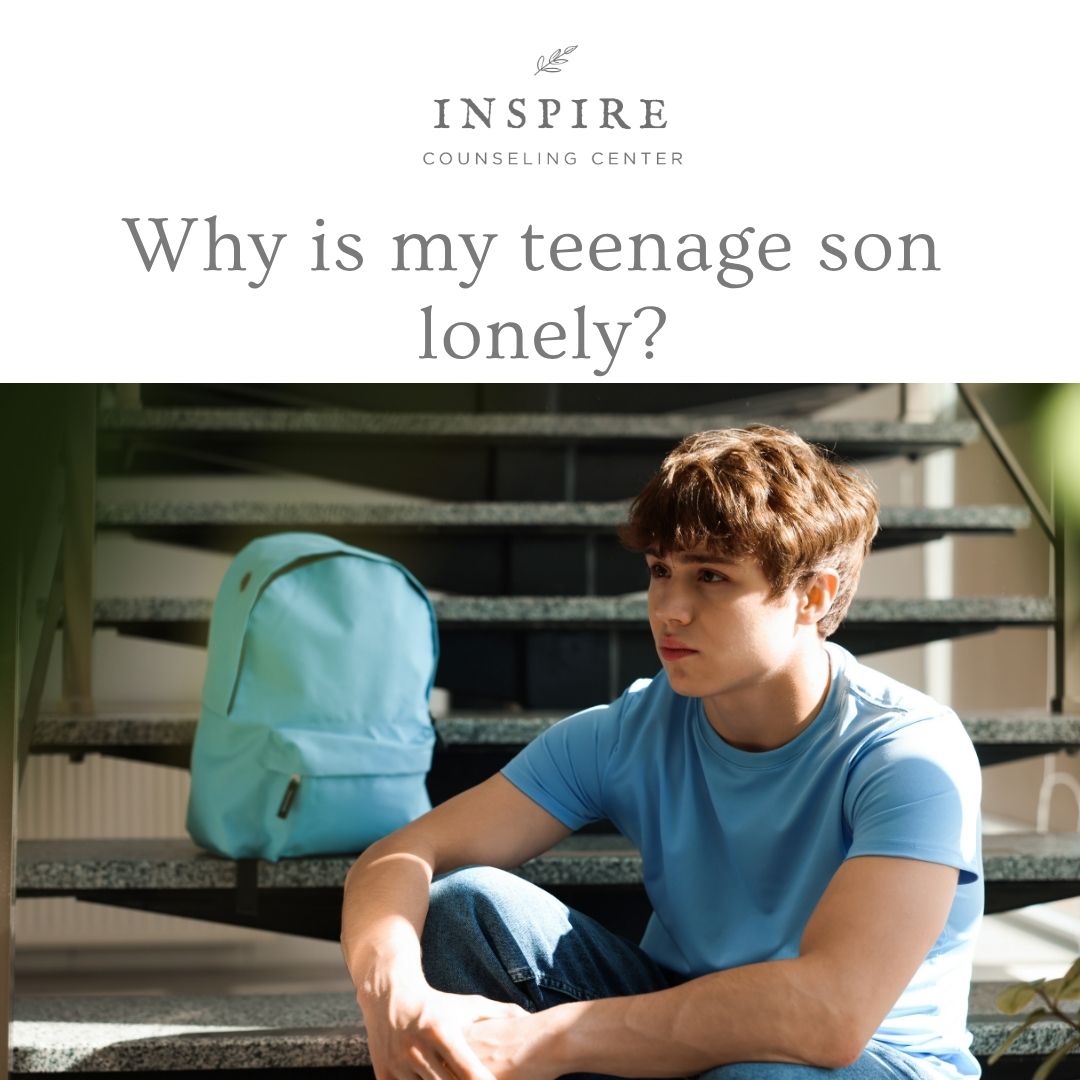
Why Is My Teenage Son So Lonely? Understanding Boys, Friendships & the Male Loneliness Epidemic
If you’re raising a teenage boy—or you are one—you may already be familiar with what has been called the male loneliness epidemic.
Recent data suggests that approximately 15% of men report having no close friends, while 25% of men ages 15–34 report feeling lonely for much of the day. These numbers matter because loneliness isn’t simply an uncomfortable feeling. Strong social connections can play an important role in mental health and overall well-being.
The stakes can be especially high for boys and men. Men die by suicide at significantly higher rates than women, while research suggests that boys who have mutually supportive friendships are less likely to experience anxiety, depression, suicidal thoughts, and substance use. They may also perform better academically.
So why can meaningful friendships become so difficult for teenage boys—and what can parents do to help?
Teenage Boys Want Close Friendships, Too
Cultural ideas about masculinity and femininity have sometimes led us to believe that boys and men simply don’t need or want the same level of emotional intimacy that girls and women do. But research tells a different story.
Researcher and author Niobe Way has spent decades studying boys and their friendships. Her work suggests that, particularly in early adolescence, boys often deeply value close friendships. They want friends they can trust. They want relationships where they can share problems, talk about things that matter, and feel like there are few topics that are completely off-limits.
In other words, boys want emotional connection.
Yet as boys move from middle adolescence toward young adulthood, maintaining that kind of closeness can become more complicated.
What Happens to Boys’ Friendships During the Teenage Years?
Late adolescence can become a period of disconnection for some boys.
As they become increasingly aware of expectations surrounding masculinity, they may also become more cautious about vulnerability. Showing sadness, admitting insecurity, saying “I miss you,” or telling a friend that they’re struggling can suddenly feel risky. At the same time, life genuinely gets busier.
Sports practices. Homework. Jobs. Dating. College applications. Activities. Social media. Family responsibilities.
Teenage boys may explain the loss of close friendships by saying everyone is simply too busy. And sometimes that’s true. But underneath that busyness, there can also be an unspoken pressure to become more independent, self-sufficient, and emotionally stoic.
Even boys who maintain longtime friendships may gradually discover that certain conversations no longer feel as acceptable.
They may still talk about sports, school, video games, girls, or what happened over the weekend—but not about loneliness, rejection, anxiety, sadness, insecurity, or fear.
That can leave a teenage boy surrounded by people and still feeling incredibly alone.
“My Son Has Friends. How Could He Be Lonely?”
One of the most important things for parents to understand is that being socially active isn’t necessarily the same thing as feeling emotionally connected.
A teenage boy can have teammates, classmates, a large friend group, a girlfriend, and hundreds of social media connections—and still feel like he doesn’t have anyone he can really talk to.
That’s why loneliness may not always look the way parents expect.
Instead of saying, “I’m lonely,” a teen might become more withdrawn, irritable, glued to his phone, overly focused on sports or school, reluctant to socialize, or increasingly disconnected from family.
He may not even recognize loneliness as the feeling underneath what he is experiencing.
How Can Parents Help a Lonely Teenage Boy?
Parents can’t create friendships for their teenagers, but they can help boys develop the confidence and emotional skills that make meaningful relationships easier to build.
1. Build Confidence Around Who He Already Is
Rather than focusing only on what a teen needs to “fix,” help him recognize what he already brings to relationships.
Maybe he’s funny. Loyal. Athletic. Creative. Intelligent. Curious. Kind. A great listener. Passionate about music. Good at making other people feel included.
Helping teenage boys identify and lean into their authentic strengths can build confidence without requiring them to become someone else in order to belong.
2. Give Him an Emotional Vocabulary
Boys sometimes struggle to talk about emotions not because they don’t have them, but because they haven’t had enough opportunities to identify and express them.
Parents can help normalize emotional language at home.
Instead of immediately trying to solve a problem, get curious:
“What was that like for you?”
“Did that hurt?”
“Were you disappointed?”
“Do you feel left out?”
Sometimes simply giving an emotion a name makes it easier for a teenager to understand what he’s experiencing.
3. Redefine Vulnerability as Strength
Teenage boys receive countless messages about what it means to “be a man.”
Parents can offer a different message: being able to understand and communicate your emotions is a sign of maturity, not weakness.
Knowing when you’re struggling, asking for help, apologizing, telling someone you care about them, or having an uncomfortable conversation all require courage. Those are strengths boys can carry into friendships, romantic relationships, families, college, careers, and adulthood.
4. Help Him Practice Relationship Skills
Friendship is a skill.
Starting conversations, joining a group, handling rejection, repairing a friendship after conflict, inviting someone to do something, setting boundaries, and talking about uncomfortable subjects can all be learned and practiced.
For a teenager who is already feeling insecure or lonely, these seemingly small social interactions can feel enormous.
Therapy can provide a private, supportive place to practice these skills without judgment.
Boys Shouldn’t Have to Choose Between Belonging and Being Themselves
This may be one of the most important messages we can give teenage boys:
You don’t have to choose between fitting in and being emotionally healthy.
With the right support, boys can learn to navigate social expectations while developing the confidence, emotional awareness, and relationship skills that allow meaningful friendships to grow.
And parents can play an important role by creating a home where emotions are welcomed rather than judged, vulnerability is viewed as courage, and asking for support is considered a strength.
If your son is struggling with loneliness, friendships, confidence, communication, anxiety, or feeling like he doesn’t quite fit in, therapy can offer a confidential and supportive place to understand what’s happening—and begin building new ways to connect.
References
Bledsoe, I., & Smith, B. (2025, August 20). Male loneliness and isolation: What the data shows. American Institute for Boys and Men.
Way, N. (2013). Boys’ friendships during adolescence: Intimacy, desire, and loss. Journal of Research on Adolescence, 23(2), 201–213.
Way, N. (2011). Deep secrets: Boys’ friendships and the crisis of connection. Harvard University Press.

Meet Langston Myers, ALMFT
Langston Myers, ALMFT, is a Marriage & Family Therapist at Inspire Counseling Center who works with adolescents, young adults, adults, couples, and families.
Langston especially enjoys helping teens and young adults navigate relationships, friendships, identity, anxiety, depression, family conflict, self-esteem, and major life transitions. As a Marriage & Family Therapist, she brings a relational perspective to her work—helping clients understand not only what they are experiencing internally, but also how their relationships, families, friendships, and environments can influence their well-being.
Langston also works with couples and individuals navigating relationships at every stage, including dating and young adult relationships, premarital counseling, relationship conflict, discernment counseling, and separation or divorce. She is Gottman Level 2 trained, giving her additional evidence-based tools for helping clients strengthen communication and build healthier, more connected relationships.
For teenage boys and young men struggling with loneliness or connection, Langston provides a warm, nonjudgmental space to talk openly about experiences that may be difficult to share elsewhere. Together, clients can work on confidence, emotional awareness, communication, friendships, family relationships, and the skills needed to develop stronger connections with others—without feeling like they have to become someone they’re not.
Langston is currently accepting new clients at Inspire’s Evanston office and virtually.
Support for Children, Teens & Parents at Inspire Counseling Center
At Inspire Counseling Center, our therapists work with children, teens, college students, and families navigating anxiety, friendships, social pressures, self-esteem, body image, school stress, and life transitions. If anxiety is getting in the way of your teen enjoying school, friendships, or everyday life, therapy can give them a supportive place to talk—and practical tools to help them feel more confident being themselves.
If you or your child could use additional support this school year, our team can help you find a therapist who fits your needs.
Reach out to Inspire Counseling Center to learn more about our therapists or schedule an appointment.

If you’d like to talk though any of this more, or want a warm hug or spot on our cozy couch, we are here to help! Call us at (847) 919-9096.
To see a list of our Therapists, click here.