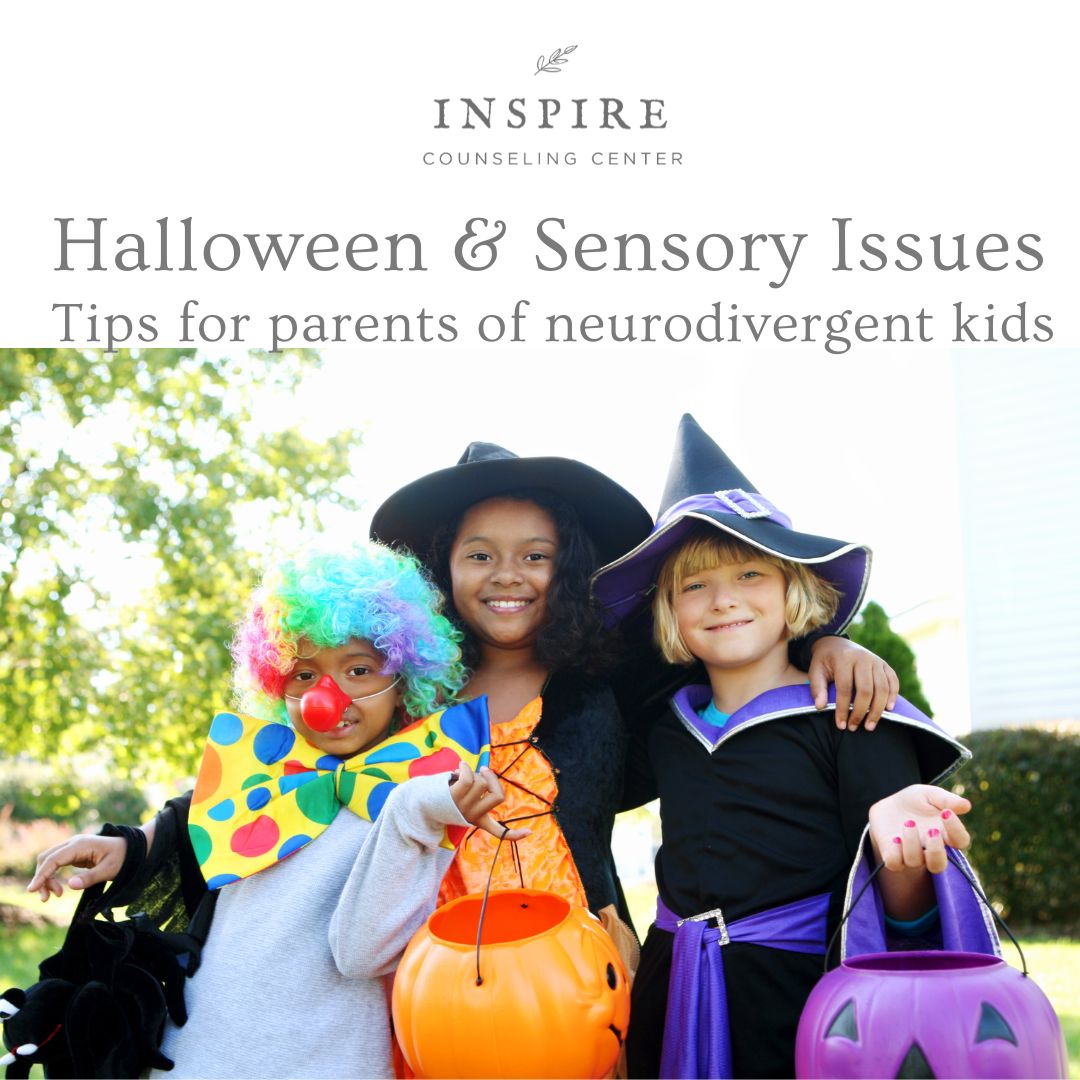
When Halloween Is a Sensory Nightmare: Helping Neurodivergent Kids Enjoy the Holiday 🎃
Masks. Face paint. Doorbells. Crowds. Screaming. Scratchy costumes. Halloween can be sensory overload disguised as fun.
Halloween is supposed to be FUN, right?
The costumes! The candy! The decorations! The excitement of trick-or-treating with friends! But what if your child’s brain experiences Halloween a little differently?
Imagine walking into a neighborhood filled with flashing lights, spooky sound effects, screaming children, unfamiliar faces hidden behind masks, and crowds of people everywhere.
Now imagine wearing a costume that feels itchy against your skin, a mask that makes it difficult to see, or face paint that feels uncomfortable every time you move your face. For some children, this sounds like the best night ever. For others, it can feel completely overwhelming.
For neurodivergent children, including kids with autism, ADHD, and sensory processing differences, Halloween can sometimes feel like a sensory nightmare disguised as fun.
And as parents, understanding what’s happening beneath the surface can make all the difference.
Why Is Halloween So Overwhelming for Some Kids?
Our brains are constantly processing information from the world around us. Sounds, lights, smells, textures, movement, and even the sensation of clothing against our skin are all forms of sensory input. For many children, the brain filters and organizes this information without much conscious effort.
But some neurodivergent children experience sensory input differently. Certain sounds may feel painfully loud, textures may be intensely uncomfortable, or busy environments may become difficult to process.
Halloween brings an unusual amount of sensory stimulation all at once.
Think about it:
- Loud noises: Doorbells, screaming, spooky sound effects, and excited crowds.
- Visual stimulation: Flashing lights, moving decorations, unfamiliar masks, and crowded sidewalks.
- Uncomfortable textures: Scratchy costumes, tight masks, face paint, wigs, and accessories.
- Unexpected surprises: Jump scares, decorations that suddenly move, and people approaching unexpectedly.
- Changes in routine: Different schedules, unfamiliar activities, later bedtimes, and unpredictable social interactions.
- For children who are sensitive to these experiences, Halloween can quickly shift from exciting to exhausting.
And here’s something important to remember:
Just because an experience is supposed to be fun doesn’t mean it feels fun to every child.
What Does Sensory Overload Look Like in Children?
One of the challenges for parents is that sensory overload doesn’t always look the way we expect.
Some children can tell us exactly what’s bothering them.
- “This costume is itchy.”
- “That noise hurts my ears.”
- “There are too many people.”
But other children, especially younger kids, may not have the words or awareness to explain what they’re experiencing.
Instead, sensory overload might look like:
- Refusing to put on a costume
- Covering their ears or eyes
- Becoming unusually quiet or withdrawn
- Crying, yelling, or becoming irritable
- Running away from a crowded or noisy area
- Having difficulty following directions
- Suddenly insisting on going home
- Experiencing a meltdown after appearing to enjoy themselves
Sometimes, a child may hold it together throughout the evening, only to become overwhelmed once they return home. And while these behaviors can be frustrating or confusing for parents, they may be communicating something important. Your child isn’t necessarily trying to be difficult. They may be telling you that something feels difficult. Instead of focusing only on the behavior, try getting curious about what’s happening underneath it.
7 Ways to Make Halloween More Sensory-Friendly
The good news? Your child doesn’t have to skip Halloween entirely to feel comfortable.
With a little planning, flexibility, and understanding, families can create meaningful Halloween experiences that work for their child’s individual needs.
1. Let Comfort Come Before Costumes
We know. You found the PERFECT costume. It’s adorable. It’s creative. You’ve been planning it for weeks. But your child puts it on and immediately wants it off. Before insisting they wear it, consider what might be uncomfortable. Is the fabric scratchy? Is the mask too tight? Does the face paint feel strange? Are there too many accessories?
Try choosing soft, familiar clothing or adapting a costume around something your child already enjoys wearing. A favorite sweatshirt can become a costume. Pajamas can become a character. A simple Halloween-themed T-shirt can be just as festive. The goal is for your child to enjoy Halloween—not endure their costume.
2. Practice Before the Big Night
For children who struggle with unfamiliar experiences or unexpected changes, knowing what to expect can make a big difference.
Before Halloween, consider practicing trick-or-treating at home. Take turns knocking on doors, saying “trick or treat,” receiving candy, and saying thank you. You can also walk through your neighborhood during the day to look at decorations and talk about what might be different on Halloween night.
For some children, pictures, visual schedules, or simple explanations can help make the experience feel more predictable.=
The more familiar an activity feels, the easier it may be to navigate.
3. Bring Sensory-Friendly Tools
A few small accommodations can make a big difference.
Depending on your child’s needs, consider bringing:
- Noise-reducing headphones
- A familiar comfort item
- Comfortable shoes and clothing
- Water and a favorite snack
- A flashlight for dark areas
- A small sensory or fidget toy
These tools aren’t about avoiding every uncomfortable experience. They’re about giving children strategies to manage their environment and feel more confident participating. And remember, accommodations aren’t a sign of weakness. They’re tools that help children succeed.
4. Choose Your Halloween Experience Carefully
Not every child needs to trick-or-treat in a crowded neighborhood filled with elaborate decorations. Maybe your child would enjoy going out earlier, before the streets become busy. Maybe a quieter neighborhood or a small gathering with familiar friends would feel more manageable. Or maybe your family decides to visit just a few houses rather than spending hours trick-or-treating. There is no rule that says a successful Halloween requires collecting an entire bucket of candy. Three houses can be just as meaningful as thirty.
5. Watch for Signs of Overstimulation—and Take Breaks
Pay attention to your child’s early signs of distress. Maybe they become unusually quiet, start covering their ears, get irritable, or have difficulty following directions. Instead of waiting until they’re completely overwhelmed, offer a break.
You might say:
“There’s a lot happening right now. Want to take a few minutes somewhere quiet?”
Or:
“Would you like to keep going, or would you rather head home?”
Giving your child opportunities to check in with their body and communicate their needs helps develop an important lifelong skill: recognizing when they need support.
6. Don’t Force Participation
Sometimes, as parents, we worry that allowing our children to avoid an uncomfortable experience will prevent them from developing resilience.
And it’s true that learning to navigate challenges is an important part of growing up.
But there’s a difference between helping a child work through manageable discomfort and pushing them beyond what they can reasonably tolerate. Forcing a child to wear a painful costume, approach a frightening decoration, or remain in an overwhelming environment isn’t necessarily building confidence. It may simply increase their distress.
Instead, think about how you can support your child in taking small, manageable steps.
- Maybe they watch trick-or-treaters from the porch this year.
- Maybe they visit one familiar neighbor.
- Maybe they wear their costume for ten minutes before changing into something more comfortable.
Building resilience isn’t about forcing children to tolerate overwhelming experiences. It’s about helping them understand their needs, practice coping skills, and gradually build confidence with our support.
7. Let Your Child Help Define a Successful Halloween
Here’s something we sometimes forget as parents:
Our idea of a magical Halloween might look very different from our child’s. Maybe we picture elaborate costumes, group photos, and hours of trick-or-treating. But your child might be happiest carving pumpkins, watching a Halloween movie, decorating cookies, or handing out candy at home. And that’s okay!
Ask your child:
- “What’s your favorite part of Halloween?”
- “Is there anything about Halloween that makes you uncomfortable?”
- “What would make this year more fun for you?”
- “Would you rather trick-or-treat, hand out candy, or do something different?”
When children feel included in decisions, they’re more likely to feel understood and empowered.
And sometimes, the best family traditions are the ones we create when we let go of how things are supposed to look.
What If My Child Has a Halloween Meltdown?
Even with thoughtful preparation, overwhelming moments can still happen. If your child becomes distressed, your first priority is helping them feel safe and supported. Try moving to a quieter environment, reducing sensory stimulation, and giving them time to regulate. Speak calmly and use simple language. Instead of immediately asking lots of questions or trying to reason through the situation, allow your child time to recover.
Once they’re calm, you can gently reflect together.
- “What felt hard tonight?”
- “Was there anything that helped?”
- “What could we try differently next time?”
These conversations help children develop self-awareness and recognize strategies that work for them. And remember, a meltdown isn’t a parenting failure.
It’s an opportunity to better understand your child’s needs and adjust your approach moving forward.
Halloween Is About Making Memories, Not Meeting Expectations
As parents, we want our children to experience the joy of childhood traditions. We want them to feel included, have fun, and make wonderful memories. But sometimes, our expectations of what a holiday should look like can get in the way of appreciating what our children actually need. For neurodivergent children, that might mean doing things a little differently. And different doesn’t mean less meaningful.
- A child who feels comfortable wearing pajamas instead of a costume can still experience Halloween magic.
- A child who visits three houses instead of thirty can still feel proud of themselves.
- A child who chooses a quiet evening at home can still make wonderful memories.
The goal isn’t to make our children experience Halloween the way everyone else does. It’s to help them experience it in a way that feels safe, enjoyable, and meaningful to them.
And along the way, we’re teaching them something far more valuable than how to trick-or-treat. We’re teaching them to recognize their needs, communicate their feelings, advocate for themselves, and approach new experiences with confidence. Those are skills that will serve them long after the Halloween decorations come down.
So this year, give yourself—and your child—permission to celebrate a little differently.
Because Halloween should be about making memories, not meeting expectations. 🧡
Support for Neurodivergent Children and Families at Inspire Counseling Center
At Inspire Counseling Center, we understand that every child’s brain works differently—and every family deserves support that honors those differences.
Our therapists work with children, teens, and parents navigating ADHD, autism, sensory sensitivities, anxiety, emotional regulation, and challenging transitions.
We help children develop coping strategies, strengthen emotional awareness, build confidence, and learn tools to manage overwhelming experiences.
We also partner with parents to better understand their child’s individual needs, create supportive routines, and navigate challenging moments with compassion and confidence.
Because helping children thrive doesn’t mean expecting them to experience the world the same way everyone else does. It means giving them the tools, understanding, and support they need to thrive as themselves.
If your child struggles with sensory overload, emotional regulation, or anxiety around unfamiliar experiences, we’re here to help.

If you’d like to talk though any of this more, or want a warm hug or spot on our cozy couch, we are here to help! Call us at (847) 919-9096.
To see a list of our Therapists, click here.