
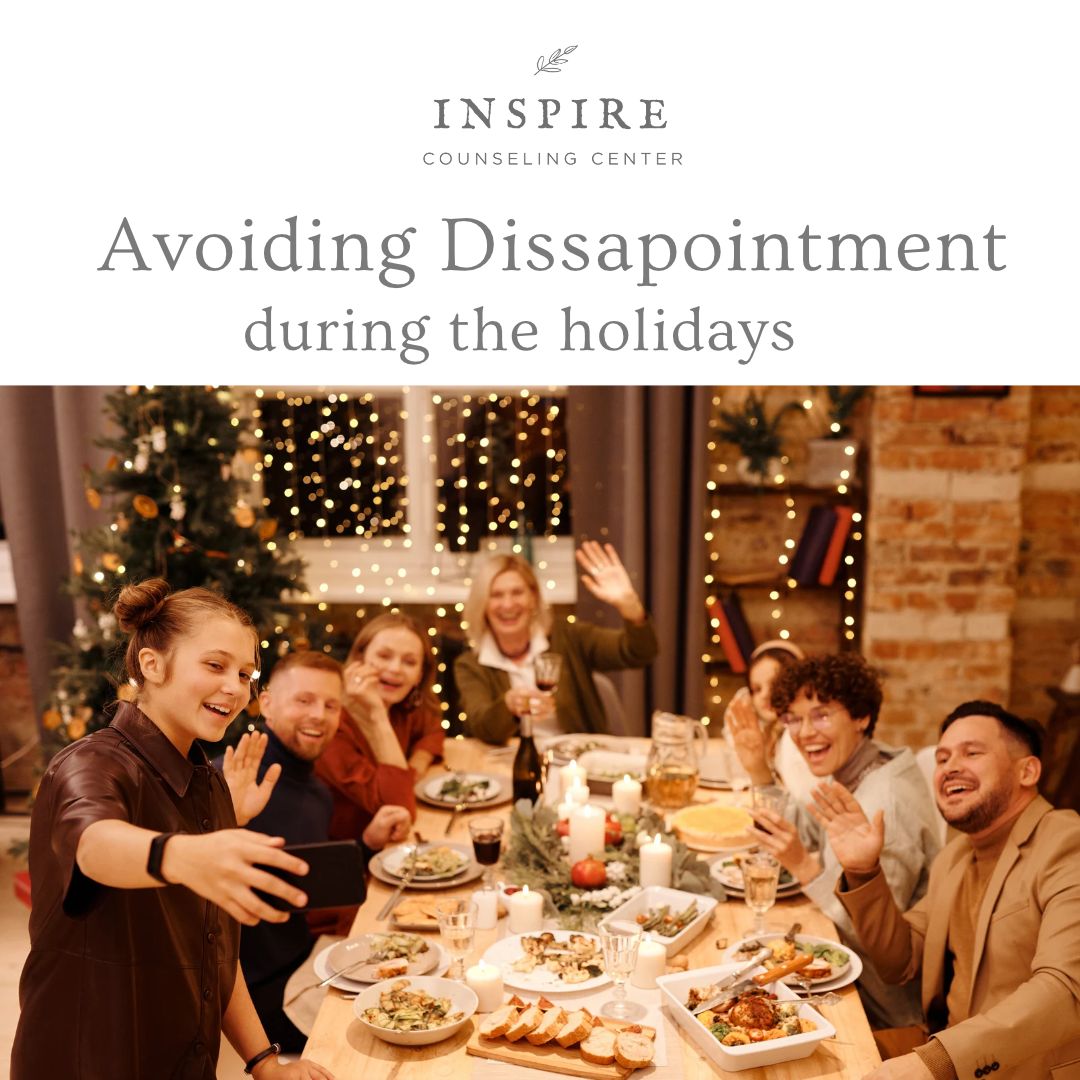
Less Pressure, More Possibility: Rethinking Holiday Expectations
You’ve planned the meal, coordinated the schedules, and pictured everyone gathered around the table. Maybe this will be the year everyone gets along. The kids will put down their phones. Someone will notice how much work you put into making everything special.
And then…real life shows up.
Someone arrives late. The kids argue. The conversation gets awkward. Nobody says a word about the stuffing you spent hours making.
Sometimes, the distance between our expectations and reality is where disappointment creeps in. We’re experiencing the holiday in front of us while also comparing it to the one we imagined. It takes us out of the present moment and robs us of the experience we’re actually having.
This season, consider giving yourself a little breathing room by swapping expectations for curiosity.
Try “I wonder” instead of “This should”
Before the holidays even begin, we often have a script in mind: how people will behave, how we’ll feel, and what will make the day a success.
Try gently changing that script:
Instead of “This is going to be the most fun Thanksgiving!” try “I wonder what this Thanksgiving will be like.”
Instead of “Everyone is going to love my stuffing!” try “I wonder whether people will enjoy the stuffing—and whether anyone will say anything.”
Instead of “The kids are going to love everything we planned,” try “I wonder which parts they’ll enjoy most.”
Instead of “We’re all going to get along this year,” try “I wonder how we’ll navigate being together, especially if things get tense.”
“I wonder” leaves room for different outcomes. You can still look forward to the day without deciding ahead of time exactly how it needs to unfold.
And if wondering whether anyone will compliment the stuffing keeps you focused on their reactions, bring it back to yourself: “I’m excited to share something I enjoyed making.”
Keep your hopes, loosen your grip
You’re allowed to want a meaningful holiday. Traditions matter. Connection matters. It’s understandable to hope that your effort will be appreciated.
But consider the difference between “I hope we have a lovely afternoon together” and “After everything I’ve done, everyone needs to be happy.”
The second puts a lot of pressure on you—and on everyone around you.
Before a gathering, ask yourself: What am I hoping for, and what am I depending on other people to deliver?
You can offer a warm welcome, ask a thoughtful question, or create time for a tradition you love. Other people will still arrive with their own moods, needs, and distractions.
Say what matters to you
Sometimes, an expectation is an unspoken request.
You might be hoping your partner will notice that you need help, or that your family will realize how important a tradition is to you. Give them a clearer way to show up:
“I’d love help cleaning up after dinner.”
“It would mean a lot to me to get one family photo. Can we do that before dessert?”